Solar Renewable Energy Certificates (SRECs)
SRECTrade currently operates monthly auctions for SRECs in states where there are SREC markets. The information on this page is general information describing how SREC programs work. For information about your specific state program see the following links:
There are three conditions that must be present in order for a state to implement an effective SREC market:
1. RPS Solar Carve-Out: The RPS solar requirement distinguishes solar from other renewable energy resources and in most cases will value solar electricity at a higher rate than other renewables. Most states will set a target for solar, either as a percentage of the total electricity sold into the state, as a fixed capacity target in megawatts (MW) or as a solar energy target measured in megawatt hours (MWh) or SRECs produced in a year.
2. Unbundled, Tradeable RECs: A state must allow the SRECs to be owned and traded by the generating facility. In some states, your utility company owns your SRECs. This is a common stipulation in state solar grant or rebate programs. Other states have a budget for solar. For example, California is currently not a viable SREC market because the state requires that utilities purchase the SRECs bundled with the electricity that the system produces. The SRECs cannot be unbundled and sold separately.
3. Penalty for Non-Compliance: Finally, in order to have a robust SREC market, your state must implement some sort of fine or penalty for non-compliance. This is commonly known as a solar alternative compliance payment (SACP). The SACP is what drives the values of SRECs above any other type of REC. Without the SACP, it is difficult to incentivize buyers to pay prices that promote solar growth.
What is an SREC?
In SREC states, the Renewable Portfolio Standard (RPS) requires electricity suppliers to secure a portion of their electricity from solar generators. The SREC program provides a means for Solar Renewable Energy Certificates (SRECs) to be created for every megawatt-hour of solar electricity created.
1 SREC = 1,000 kWh of solar electricity = 1 MWh of solar electricity
10 kW solar capacity = ~12 SRECs per year
The SREC is sold separately from the electricity and represents the "solar" aspect of the electricity that was produced. The value of an SREC is determined by the market subject to supply and demand constraints. SRECs can be sold to electricity suppliers needing to meet their solar RPS requirement. The market is typically capped by a fine or solar alternative compliance payment (SACP) paid by any electricity suppliers for every SREC they fall short of the requirement. The sale of SRECs is intended to promote the growth of distributed solar by shortening the time it takes to earn a return on the investment.
Once the installation of a solar system is complete, the system must then be certified by the state(s) in which it is eligible to sell SRECs and then must create an account with the tracking platform used by that state. Once registered, every month, the tracking platform will issue SRECs based on the generation of your system. In some states, estimated generation is used for systems under 10kW, while all other systems are required to submit generation on a monthly basis. One SREC is created for every 1000kWh of electricity created. For example, a 10kW system can generate approximately 1 SREC per month. However, it is up to the solar installation owner to decide how to manage the SRECs that are produced.
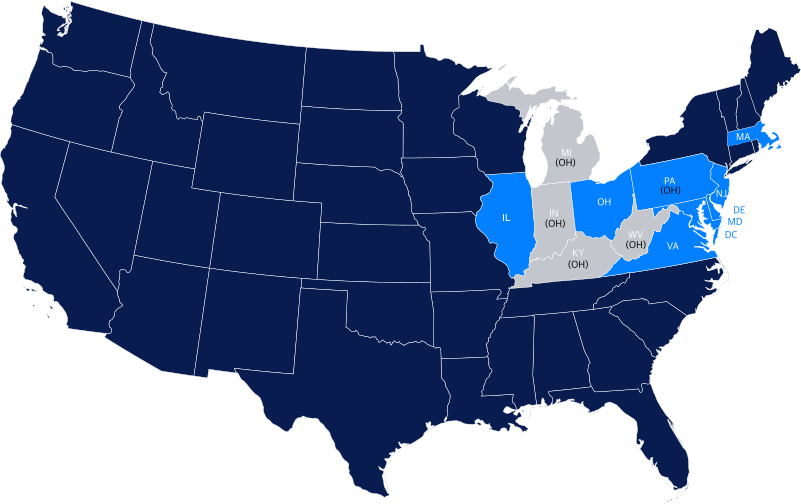
Many states will certify solar electric systems from out-of-state and allow the SRECs from those facilities to count towards the RPS. The following map shows what state individuals can sell their SRECs into:

How SRECs are priced
There is no assigned value to an SREC. Prices are influenced by supply and demand. The supply is determined by the number of solar installations producing SRECs and trading them. The demand is determined by individual state RPS solar requirements and the Solar Alternative Compliance Penalty (SACP) set by the state. The RPS solar requirement represents the number of SRECs that the electric suppliers are required to collect each year. The SACP represents a theoretical maximum value of an SREC, since it is the amount paid per SREC by the electric suppliers if they do not collect enough SRECs. In states, such as New Jersey, where the SACP in 2010 is $693, SRECs are worth more than a state with an SACP of $250. You can click here to view a complete Auction History.
How SRECs are sold
Since it is very costly for electric suppliers to buy direct from individuals, solar owners have limited options for selling their SRECs. Most suppliers will either issue cumbersome requests for proposals (RFPs) or work directly with third-party aggregators and brokers. Prior to SRECTrade, individual solar generators had little visibility into actual SREC market prices as well as markups charged by middlemen. In many cases, an SREC is traded several times before reaching the electric supplier. SRECTrade was founded with a simple mission: To provide the critical final component of the SREC program by establishing a public marketplace connecting sellers directly to suppliers in an inexpensive, easy, transparent and equitable way.
For more information on how SRECTrade's monthly auctions work, please see the How It Works page.
Getting Started
Here are the steps for getting started with an SREC program in your state:
1. Understand SRECs: Utilize the resources on our website to learn as much as you can about SRECs. Each state program is unique and you can find out more information on the individual state page and in our blog. In addition, learn more about the service we offer on our EasyREC page.
2. Find out where you are eligible to sell your SRECs: Your state may or may not have a program; however your ability to sell your SRECs into other states could have a significant impact on the value of your SRECs. You may be eligible to get your system certified in many state programs, regardless of if your state has one or not. Everyone should check our Cross-Listing post to see the states in which they may be eligible for certification.
3. Get your system installed: SRECTrade works with several installation companies. You should be able to sign up for the EasyREC service through your installer. If they do not offer the service, then feel free to contact us directly.
4. Enroll with SRECTrade: SRECTrade provides two options. If you sign up for the EasyREC service, we handle everything else including submitting your state certification applications, creating your SREC tracking account and automating the sale of your SRECs in our auction.
If you do not sign up for EasyREC, here are the additional steps:
4a. Get your system certified by your state: Once the system is installed, it is now ready to be certified by your state and any other states in which you are eligible. You can find out more on where you are eligible and how to apply on the Cross-Listing page. Every state handles this process differently, but we recommend beginning the application as soon as possible, before your installation is complete.
4b. Set up your SREC tracking account: Every state or region will use a different system for creating and tracking the SRECs. The Mid-Atlantic states use GATS, North Carolina uses NC-RETS, Massachusetts uses NE-GIS. If you opt to manage your own SRECs, you will need to have a tracking account with one of these registries. Once you have SRECs in that account, you can then post them in our auction.
4c. Create an account online with SRECTrade: This is the simplest step of all. Complete the online form to create your account and when your SRECs are available in your tracking account, log into your SRECTrade account, select the “Orders” link and place an offer to sell your SRECs.
5. Understand the timing: After you initially sign up, it will take a few months before you begin receiving payments. For example, if your system goes online on January 1st, your January generation will be recorded on February 1st. Your first SREC(s) will be actually credited to your account on March 1st. They would then be sold in the March auction, so your first payment would come in late March. After that, payments will come as SRECs are generated. Also note: some states operate on a quarterly basis, rather than monthly.
|